Marie Street
Safety Action Plan: Focus on Marie Street
City officials are taking a closer look at Marie Street, a key arterial road in Truth or Consequences, as part of a broader effort to improve infrastructure and increase transparency. At the June 11 meeting, the Truth or Consequences City Commission approved the Vision Zero Safety Action Plan (SAP) presented by Wilson & Company. The plan, which aims to eliminate traffic fatalities and severe injuries by 2030, outlines a comprehensive strategy for safer, more equitable mobility throughout the city. Among the corridors identified for improvement, Marie Street stands out as a key focus area.
Marie Street: A Corridor with Potential
Marie Street is more than just a neighborhood road—it’s part of a network of streets surrounding the Municipal Golf Course that includes Parkway Drive, Pershing Street, and Ed Bailey Drive. These streets have been recognized for their potential to support active transportation infrastructure, such as bike lanes, pedestrian paths, and ADA-compliant facilities. The plan recommends updated roadway striping, the addition of chicanes (serpentine curves) for traffic calming, and intersection improvements to enhance safety and accessibility.
Wilson & Company, which provided grant-writing services at no cost, helped the city apply for funding to conduct a corridor study of Marie Street. This study would assess the feasibility of implementing multimodal improvements without reducing existing traffic lanes—thanks to the ample public right-of-way available.
A Broader Vision for Complete Streets
Marie Street is not alone in its potential. Other roadways like Marshall and Veater Streets, also offer opportunities for transformation under the city’s Complete Streets approach. These corridors could be redesigned to accommodate all users—drivers, cyclists, and pedestrians—without compromising traffic flow.
The plan also highlights Riverside Drive as a candidate for redevelopment into a vibrant active transportation corridor, given its proximity to the Rio Grande and diverse land uses. A feasibility study is recommended to explore this vision further.
City Leadership and ICIP Planning
City Manager Gary Whitehead emphasized the importance of including Marie Street in the city’s Infrastructure Capital Improvement Plan (ICIP). During a recent discussion, he stated:
“We need to focus on Marie Street… I’m going to recommend that we add it to the infrastructure capital improvements... As we begin to find and locate the funds for Marie Street, it needs to then get on our ICIP. That’s the way we would want it—so we know what the top five are. And if everyone agrees that Marie Street is in the top five, then we need to add it.”
Equity and Safety at the Core
The SAP is grounded in the Five E’s of Safety—Equity, Education, Engineering, Enforcement, and Evaluation. It recognizes the city’s socioeconomic challenges, noting that Truth or Consequences ranks in the 84th percentile for low-income households. Equity-focused investments, such as those proposed for Marie Street, are essential to ensure that all residents benefit from safer, more accessible streets. Grant funding and placement on the ICIP are critical to securing the likelihood of project completion.
Assistant City Manager Traci Alvarez reflected on the urgency the city faced during a recent grant application process:
"The grant application was due that day, and we had to decide—do we go for it and triage something quickly, or wait another year and risk missing out
on funding that might not be available later? We met with Gary, went down to the Streets Department, and identified a few quick projects we could pull together.” Marie Street was one of four that were submitted for a research funding grant."
Street Department Outline Road Repairs, Challenges, and Community Impact
In a recent on-site discussion, Streets Department team members Brenden Anglin and Buster Smith joined a city representative to drive the length of the road and discuss its condition, the challenges of repair, and the planning process underway.
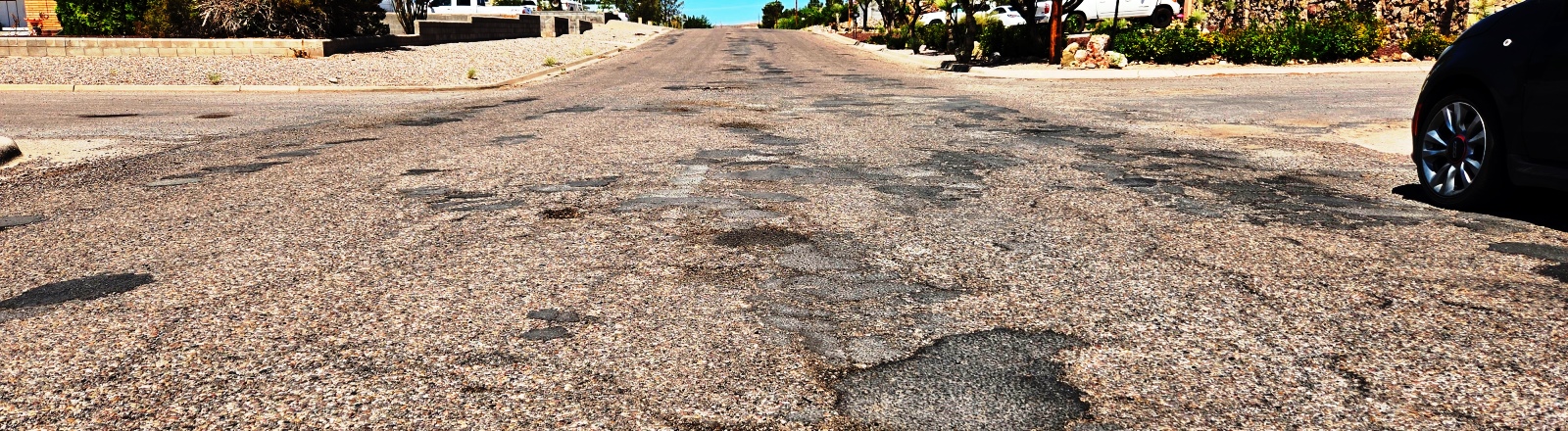
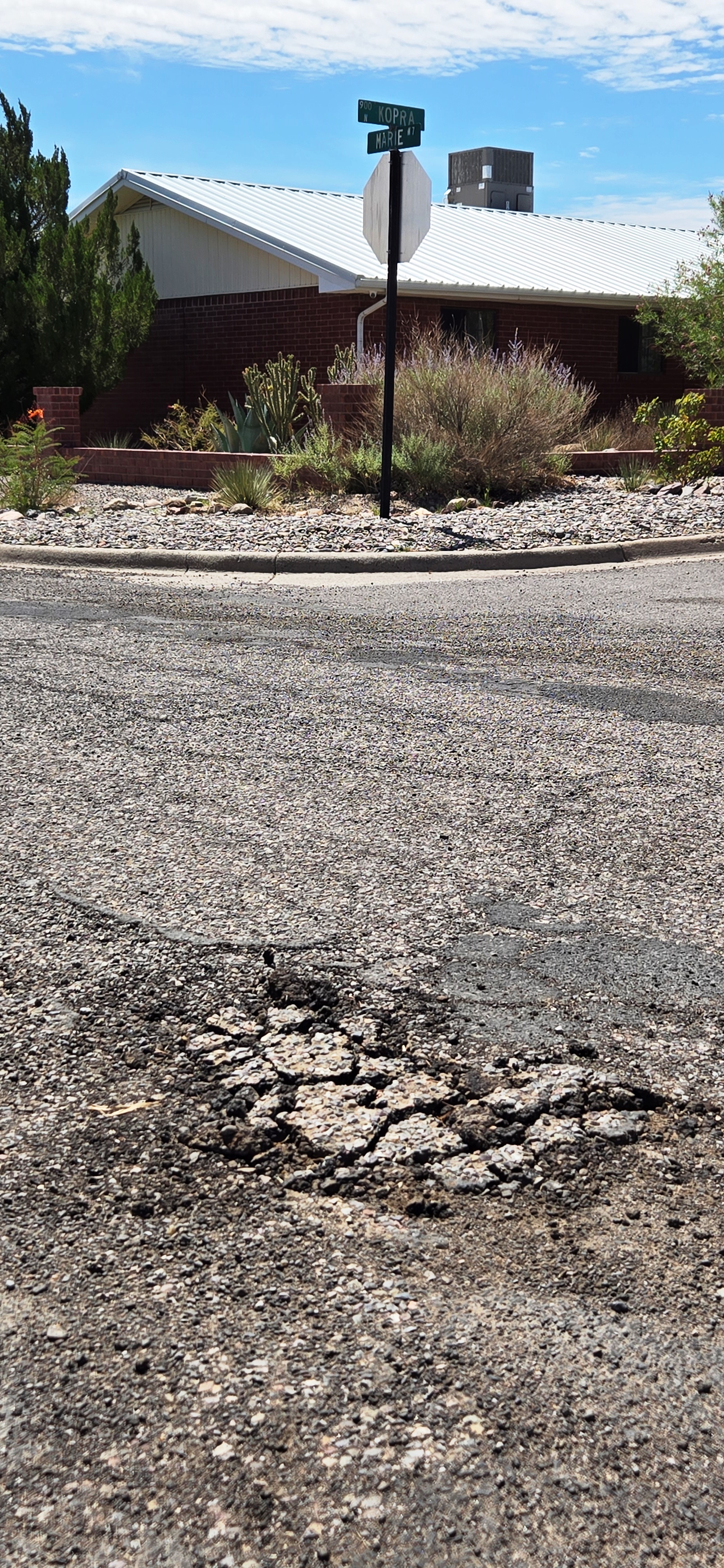
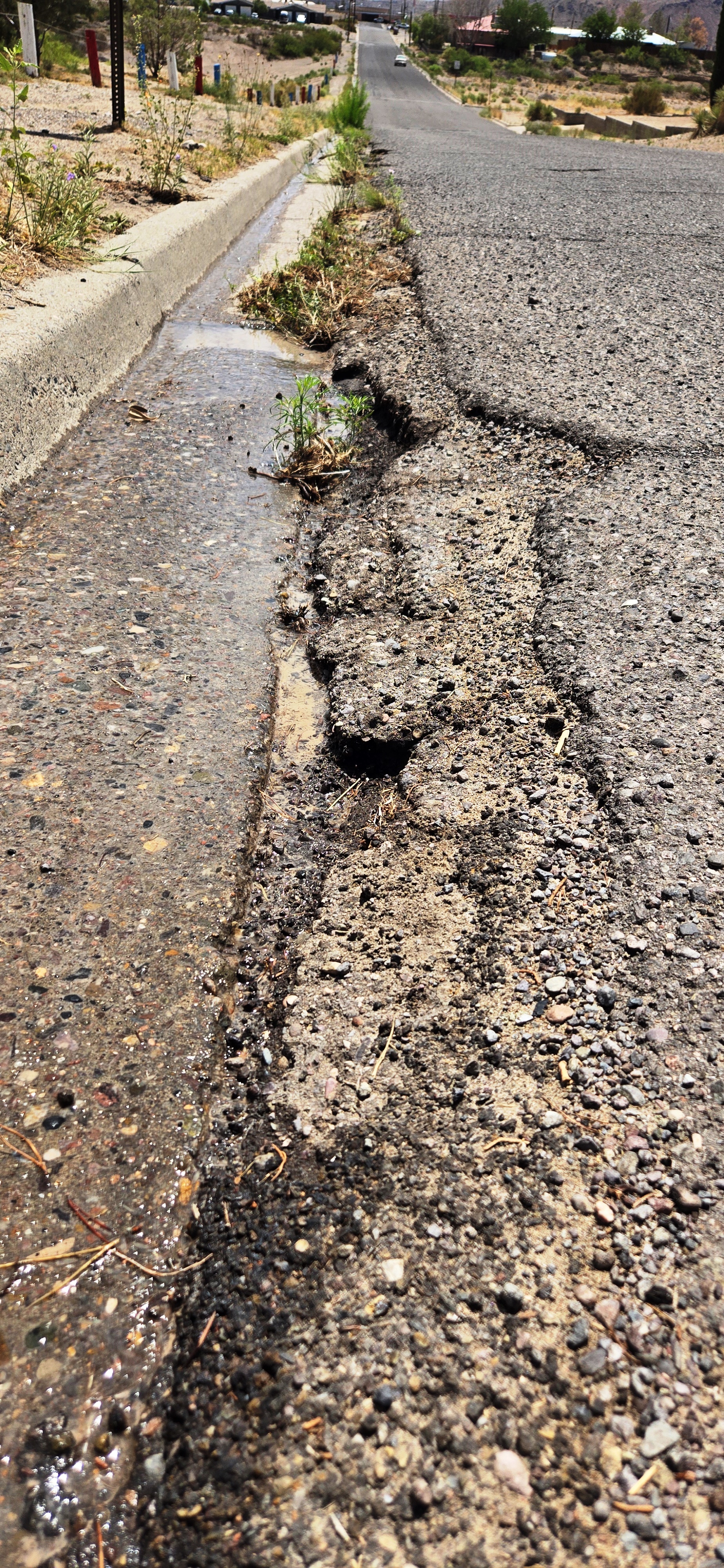
Marie Street spans approximately 4,425 feet—just under a mile—but its importance to the community far exceeds its length. As a heavily used through street, it has become a priority for the city’s infrastructure team. The road shows visible signs of wear, including “alligator cracking,” a pattern of surface failure caused by water infiltration and deterioration of the subbase. Smith explained that while the road had previously been chip sealed, that treatment typically lasts only five years. Over time and with repeated water leaks, the road’s structural integrity has significantly declined.
The city is currently developing a cost estimate for the project, which will likely be broken into phases due to budget constraints. “To put in for the whole thing is way too much for a single project,” Smith said. “They want us to phase it out.” Anglin added that while two phases would be ideal, the team is prepared to break it down further if needed. The planning must also account for coordination with other departments, including water and wastewater, to avoid laying new pavement only to have it disrupted by future utility repairs.
“This is like a Rubik’s cube,” the city representative noted. “Everything has to be carefully coordinated.” Anglin emphasized that Marie Street contains multiple utility lines, including a sewer line, and a dam, which adds to the complexity. The team must also consider ADA compliance, which is required for any federally funded project. This includes installing sidewalks—likely on the north side of the street to minimize impact on private property—and ensuring the road meets accessibility standards.
Federal grants come with additional requirements, including the “Build America, Buy America” provision, which mandates that materials used in the project be manufactured in the United States. “There’s a lot of paperwork that goes into this,” Smith said. “It’s not just about having the money; it’s about meeting all the criteria.”
Anglin identified several challenges in the planning process, including phasing, labor and equipment coordination, and minimizing disruption to traffic. Marie Street is a busy route, especially during school hours, and construction could affect school zones and bus routes. “We may have the project go on a little further than what we think,” he said, noting that unexpected delays and contingencies, such as inflation, equipment breakdowns, and underground surprises must be factored into the timeline and budget.
The team also discussed the importance of community engagement and communication. While some residents may be concerned about sidewalk installations or tree trimming near their property, others welcome the improvements, recognizing the potential increase in property value and neighborhood safety. “We try to give residents the option to handle vegetation trimming themselves before the city steps in,” Smith said, highlighting the department’s efforts to collaborate with homeowners.
Looking ahead, the city is awaiting the beginning of a corridor study that will help determine the best path forward. Anglin noted that while traffic-calming measures like barriers have been suggested, they could complicate maintenance and street cleaning. “We’ve got to find a balance,” he said. “Sometimes what looks good on paper isn’t practical for long-term upkeep.”
As the Marie Street project moves forward, city officials remain committed to transparency, thoughtful planning, and community involvement. Residents can expect continued updates through City Blueprint and opportunities to provide input as the city works to improve one of its most vital roadways.