Historic Register Celebration
| The Hot Springs Bathhouse and Commercial Historic District | Registration Form | Photo Document | Combined Document |
| Main Post Office | Registration Form | Photo Document |
Celebrating 20 Years of the Historic Hot Springs District: A Legacy of Healing, Heritage, and Heart
On March 29, 2005, the Hot Springs Bathhouse and Commercial Historic District was officially listed on the National Register of Historic Places, recognizing a 56-acre stretch of downtown that has long been a unique gathering place for our community. Now, twenty years later, we celebrate not just a designation, but a living legacy, one steeped in mineral-rich waters, architectural charm, and the enduring spirit of a city that has always welcomed seekers, artists, and dreamers.
A Basin of Healing and History
According to the archives of the Geronimo Springs Museum, Sierra County’s oldest museum and a treasure trove of local history, the geothermal waters of Truth or Consequences have drawn visitors for centuries. From the Mimbres and Mogollon cultures to early ranchers and railroad workers, the springs have long been a source of healing and connection.
The museum’s exhibits include historic photographs, bathhouse memorabilia, and oral histories that illuminate the district’s evolution from a health resort city named “Hot Springs” to the uniquely spirited Truth or Consequences. Architectural styles like Pueblo Revival and Streamlined Moderne still grace the streets, echoing the city’s heyday as a wellness destination.
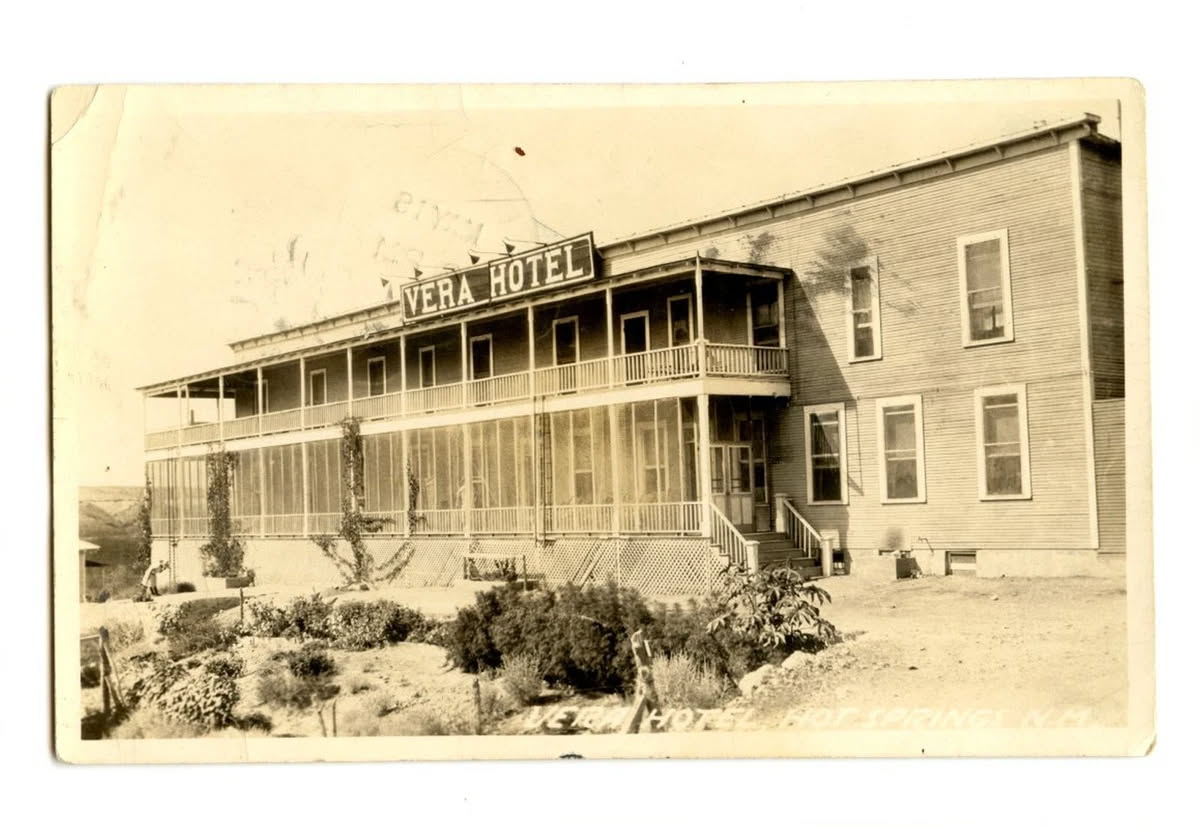
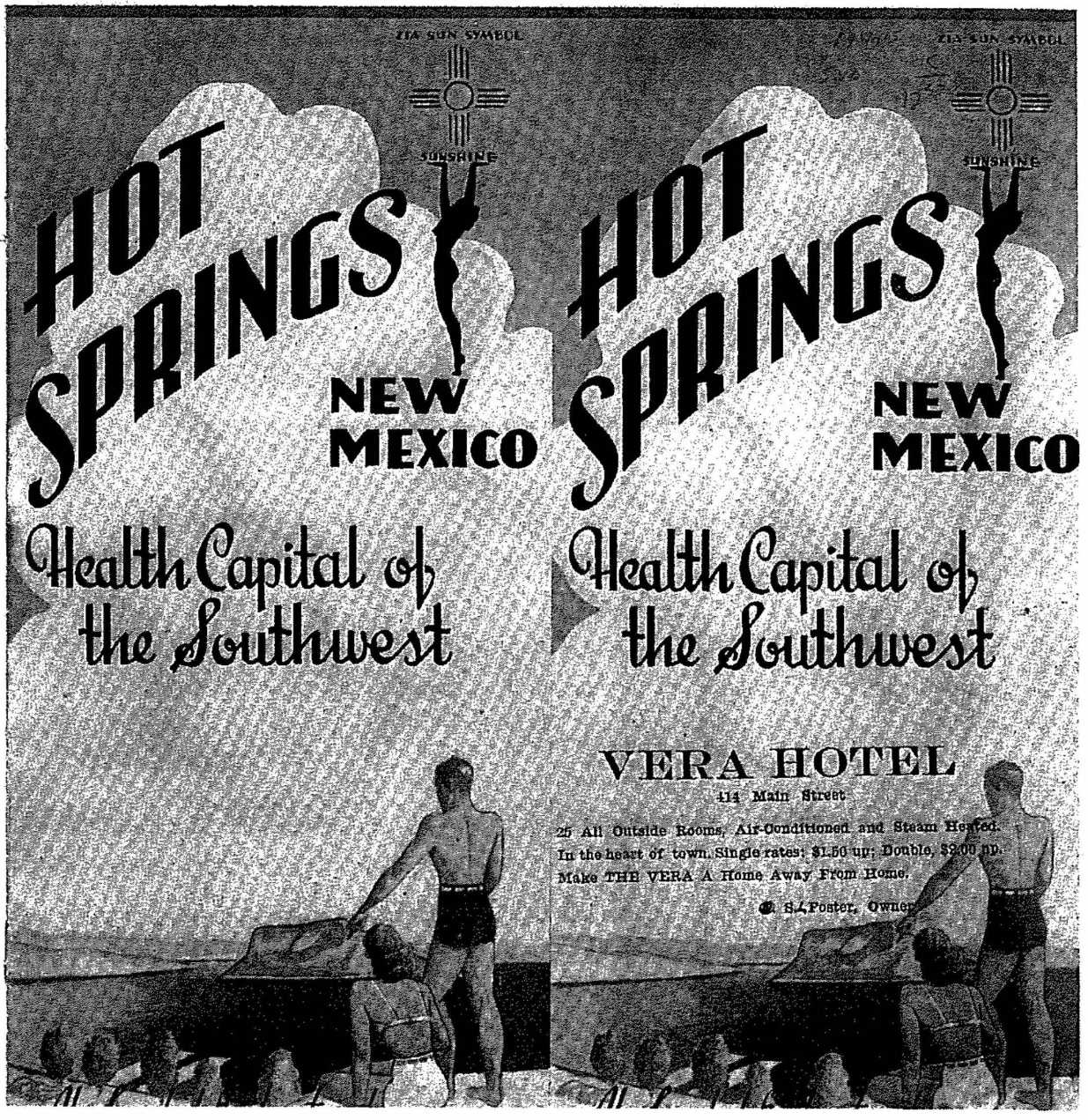
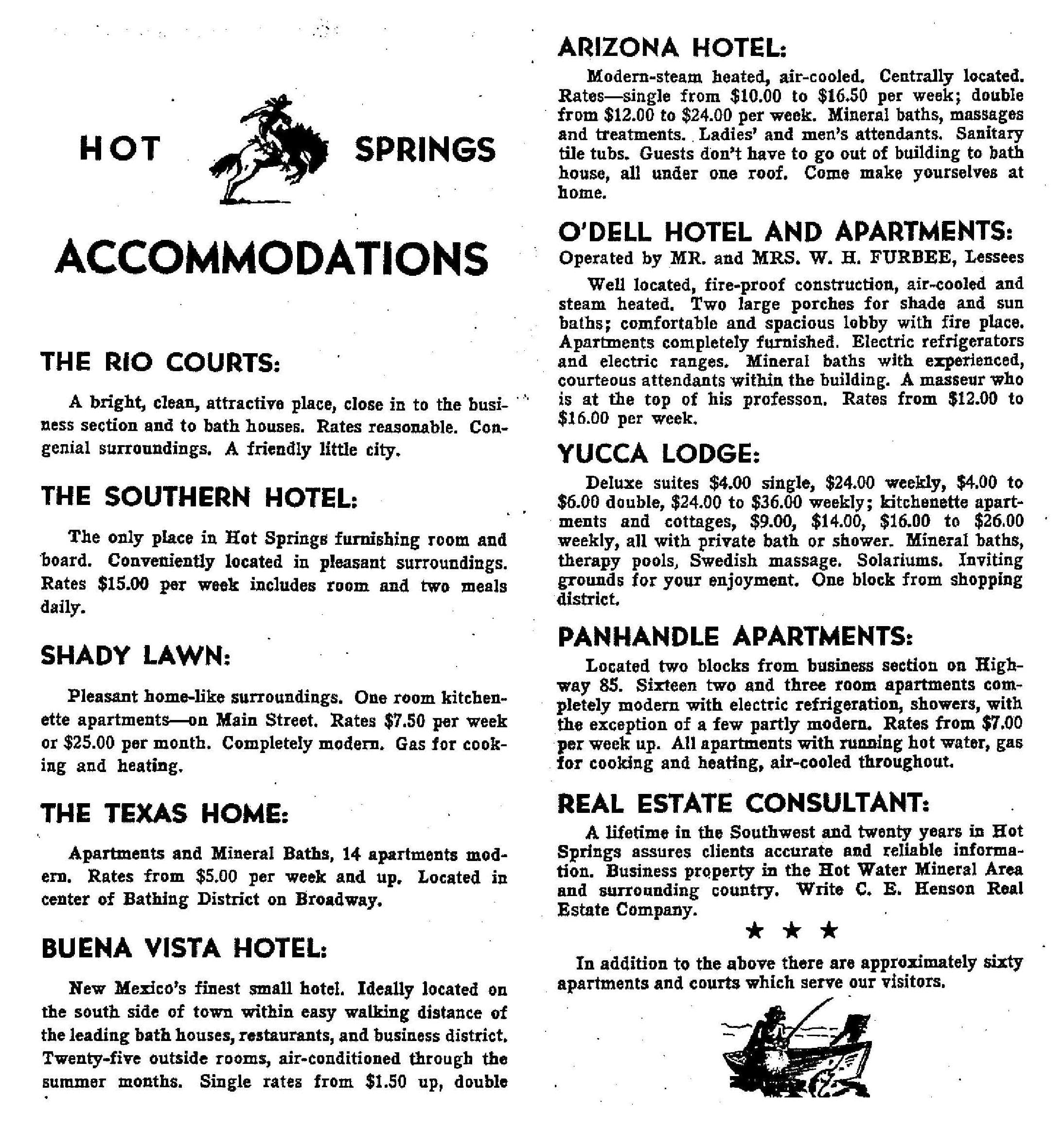
One oral history recalls a 1930 Chamber of Commerce brochure that proclaimed the area as the “healthiest spot in the world,” boasting of its ideal climate and therapeutic waters. By 1940, the New Mexico Business Directory listed 19 bathhouses and massage therapists and 51 hotels, cottages, and rooming houses in Hot Springs. That same year, the Chamber declared the city “The Health Capital of the Southwest Where Summer Spends the Winter,” a slogan echoed in advertisements like one referenced for the Vera Hotel (see image below).
The Road to Recognition
The journey to historic designation began decades before the 2005 listing. In the 1980s, the Department of Historic Preservation of the Cultural Affairs of the State of New Mexico and the University of New Mexico showed interest in the downtown area. Preliminary reviews were conducted by UNM architectural historians, but the project stalled due to limited engagement.
Momentum returned in the early 2000s when the now-defunct Sierra Community Council, led by Patricia (Pat) Rocco, revived the effort. Building on surveys from the 1980s, volunteers completed documentation for approximately 250 buildings. Oral histories from longtime Sierra County residents, manuscripts by Sherry Fletcher and Helen Morgan Stomp, and resources from the Geronimo Springs Museum enriched the research.
A proposal submitted in 2001 secured initial funding, but the hired historian was unable to complete the nomination, and the funds were lost. Undeterred, the Council submitted a second proposal in 2003, and historian David Kammer, recommended for his work on the New Mexico Veterans Center, was brought on board.
On October 8, 2004, the New Mexico Cultural Properties Review Committee met in Truth or Consequences and unanimously voted to list the Hot Springs Bathhouse, Commercial, and Main Street Historic District in the State Register of Cultural Properties. The committee also forwarded the nomination to the National Park Service for federal recognition.
The boundaries of the district extend across Main and Van Patten Streets, as well as Date and Clancy Streets. Out of the 250 buildings surveyed, 123 were classified as contributing structures, meaning they were constructed prior to 1950 and have retained their original character without significant alterations. Many of these buildings are featured in the documents linked above, and you’ll likely recognize them once you see the images.
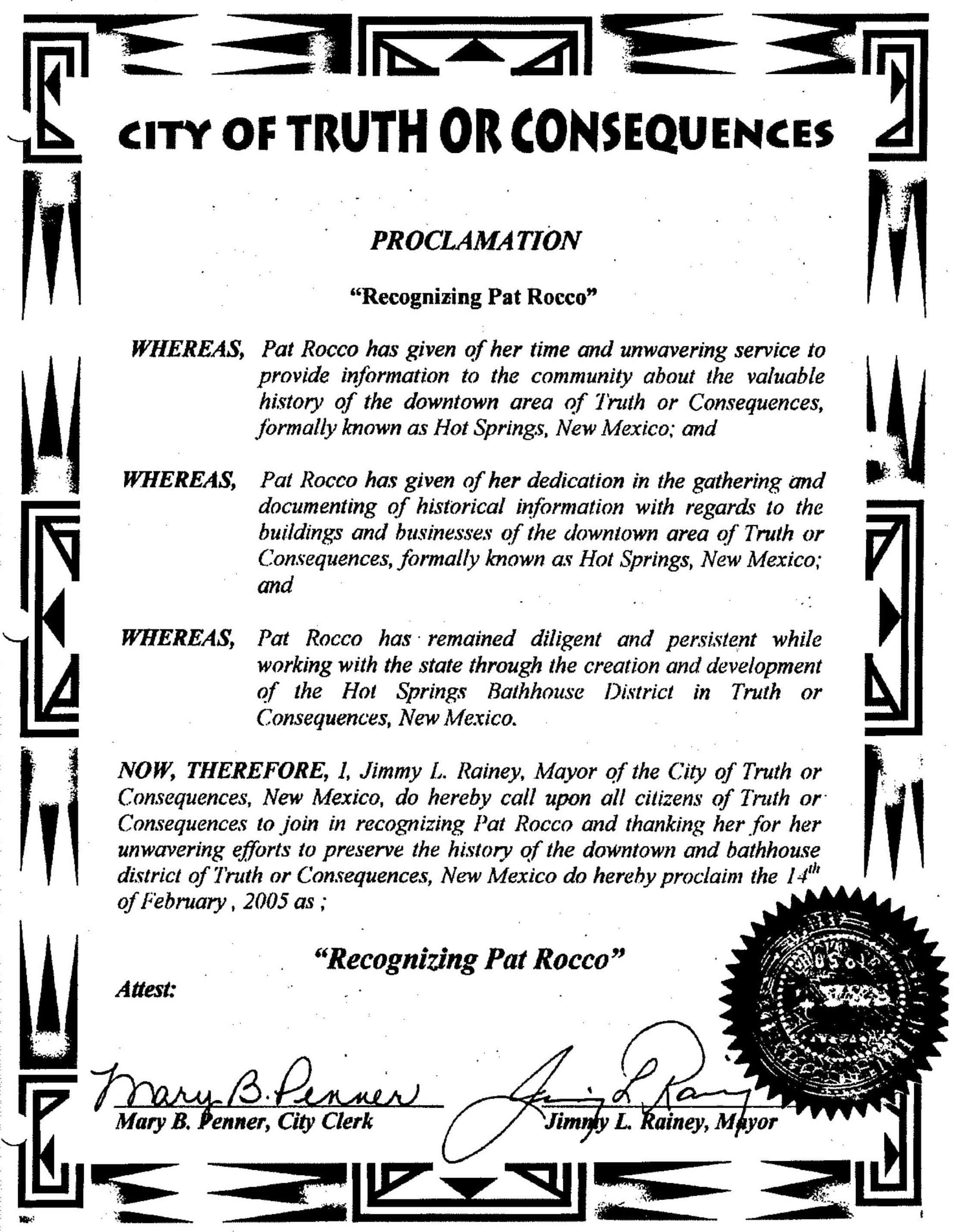
On May 10, 2005, the district was officially entered into the National Register of Historic Places (Reference #05000409). A congratulatory letter was sent to Rocco on May 23, 2005, recognizing her tireless efforts. Earlier that year, on February 14, the City of Truth or Consequences issued a proclamation honoring Pat for her dedication to preserving the city’s heritage.
Celebrating the Truth or Consequences Main Post Office: A Legacy of Architecture, Art, and Civic Pride
Just inside the Hot Springs Historic District, the Truth or Consequences Main Post Office stands as a proud symbol of federal investment, artistic achievement, and local pride. Constructed in 1940 under the Office of the Supervising Architect, it remains the city’s first and only federally-built post office, a product of the massive public building programs launched during the Great Depression.
Architecturally, the building is a rare example of “starved classical” design, a simplified style commonly used across the western United States. While similar designs can be found in Portales and Deming, New Mexico, this post office is unique for its construction method: poured-in-place concrete. Concrete was poured into steel-reinforced molds, allowing for a strikingly minimal façade, an approach seldom used in western post office construction, though a few examples exist in California and Washington.
The local newspaper, The Sierra County Advocate, captured the community’s excitement at the time, writing, “Perhaps the people generally have never been prouder of anything than they are of their new post office.” This enthusiasm marked a turning point in civic identity, just decades after Hot Springs’ incorporation in 1916.
Inside, the building houses a remarkable mural titled The Indian Bear Dance by artist Boris Deutsch. Measuring five feet by twelve feet and painted in oil, the mural was installed above the Postmaster’s door in June 1948. It was one of 48 winning designs selected from 1,475 anonymous submissions in a nationwide competition sponsored by the Fine Arts Section of the Federal Works Agency. The contest, featured in Life magazine in 1939, was the largest art competition ever held in the United States at the time and played a significant role in shaping American mural art.
The mural is not only a visual centerpiece but also a legacy of the New Deal’s public arts programs, which aimed to bring artistic expression into everyday public spaces. Eight New Mexico post offices received murals under these initiatives, contributing to the state’s rich tradition of Southwestern art. The Truth or Consequences mural reflects the era’s commitment to cultural storytelling and community enrichment.
Today, 35 years after its listing on the National Register of Historic Places in 1990, the Truth or Consequences Main Post Office continues to inspire. Nearby, the Geronimo Springs Museum’s “Ralph Edwards Room” honors the city’s mid-century civic pride and the annual Fiesta that grew from the legacy of the former famed game show host. Together, these landmarks celebrate a time when federal investment, local enthusiasm, and artistic vision came together to shape the heart of a community.
Looking Forward, Rooted in the Past
As Truth or Consequences continues to evolve, with new galleries, festivals, and community spaces breathing life into old storefronts, these anniversaries remind us of the importance of preservation and storytelling. They invite us to reflect on what makes our city unique: the blend of healing waters, artistic energy, and a history that refuses to be forgotten.
Whether you’re soaking in a century-old bathhouse or mailing a letter beneath a WPA-era mural, you are part of a living story, one that began long before 2005 and will continue long after this anniversary year.